
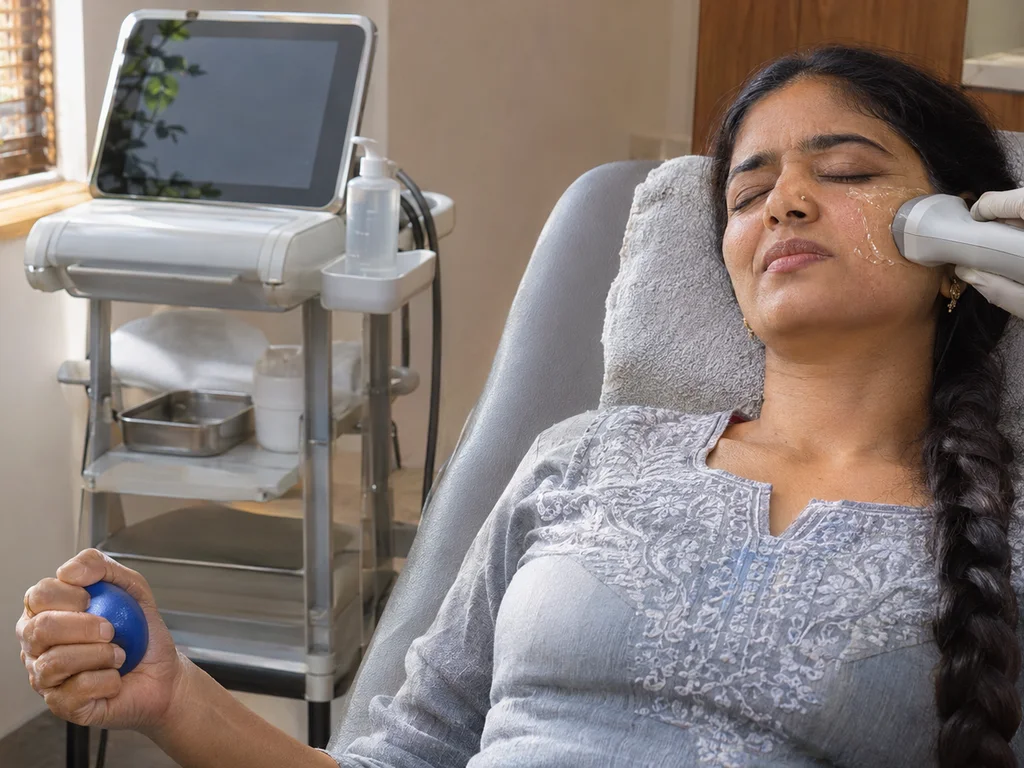
Ultherapy can feel warm and tingly, and most of the common side effects are described as temporary. This page lists what the sources name so that nothing catches you off guard.
What you may feel during treatment
WebMD says you may feel a warm, tingling sensation as the Ultherapy device works to heat the tissues under your skin. Knowing that ahead of time can make the first minutes less surprising. WebMD's explanation of how Ultherapy works to tighten facial skin describes the process in more detail.
The common temporary side effects
Healthline says the most common temporary side effects from Ultherapy include heat sensations, skin tingling, redness, swelling, and tenderness. It adds that bruising can occur in rare cases, but bruises typically go away after several days.
You can turn that list into a quick checklist: heat, tingling, redness, swelling, tenderness. Compare it with how your skin feels afterward. Healthline's comparison of Thermage and Ultherapy is where that list appears.
What you can note on your own
Keeping a short log is easy and costs nothing. Write the date, the sensation, and how long it lasted.
A log helps you describe things clearly to a provider. It does not replace a clinician, and any sign that worries you belongs in front of a licensed professional. For more reading before you decide, see Healthline's Ultherapy overview.
One low-cost action
Copy the five common effects onto a small card and keep it where you will see it after your visit. If you also want to compare other non-surgical routes, Healthline's guide to a neck lift without surgery is a no-cost read.